Advertisement
If someone owes you money, damaged your property or broke a contract, you may not need a full civil lawsuit to get paid. Ontario’s Small Claims Court is designed to resolve smaller disputes quickly, at a lower cost, and with simpler rules. Many people represent themselves. This guide walks through how it works.
How much can you claim?
Since October 1, 2025, Ontario’s Small Claims Court can hear claims for up to $50,000, not counting interest and costs. The previous limit was $35,000. The same change raised the minimum amount for an appeal to the Divisional Court to $5,000.
If your claim is worth slightly more than $50,000, you can choose to give up the extra amount and stay in Small Claims Court. That can make sense if the time and expense of the Superior Court would eat up the difference.
What kinds of cases go to Small Claims Court?
- Unpaid invoices, loans and debts
- Broken contracts, including renovation and service disputes
- Property damage
- Return of personal property worth $50,000 or less
- Some personal injury claims with modest damages
The court can order someone to pay money or return property. It cannot order someone to do or stop doing something, such as finishing a job. Disputes between residential landlords and tenants usually go to the Landlord and Tenant Board instead, whose monetary limit was also raised to $50,000.
Check the deadline first
In most cases, Ontario’s Limitations Act, 2002 gives you two years from the day you discovered the problem to start your claim. If you miss that deadline, you may lose the right to sue, no matter how strong your case is. If the deadline is close, get advice right away.
The steps, from claim to judgment
| Step | What happens |
|---|---|
| 1. Demand letter | Not required, but a written demand often settles the matter and shows the court you tried. |
| 2. Plaintiff’s Claim | You file the claim (Form 7A), which can be done online, and pay the filing fee. |
| 3. Service | You serve the claim on each defendant, following the court’s rules for service. |
| 4. Defence | The defendant has 20 days after being served to file a Defence. If they do not, you may be able to ask for default judgment. |
| 5. Settlement conference | A mandatory meeting with a judge to narrow the issues and try to settle. |
| 6. Trial | If the case does not settle, a deputy judge hears the evidence and decides. |
| 7. Enforcement | If the other side does not pay, you can use tools such as garnishment, a writ of seizure and sale, or an examination hearing. |
What does it cost?
Court fees are set by regulation and are much lower than in the Superior Court. Check the current fee schedule on the Ontario government website before you file. If you win, the court can order the other side to pay some of your costs. For legal representation fees, that amount is generally capped at 15% of the amount claimed, unless the other party acted unreasonably. If you lose, you may have to pay some of the other side’s costs.
Do you need a lawyer?
You are allowed to represent yourself, and many people do. In Small Claims Court you can also be represented by a lawyer or a licensed paralegal. Paralegals are licensed by the Law Society of Ontario and often charge less. Consider getting help if:
- The amount is large, or close to the $50,000 limit
- The other side has a lawyer
- The facts or the law are complicated
- You are being sued and think you may have a counterclaim
You can browse civil litigation lawyers on CanadaLawList, or search by city, such as lawyers in Toronto or lawyers in Ottawa.
Tips for a stronger case
- Keep every contract, invoice, receipt, text and email.
- Take dated photos of any damage.
- Write a short timeline of what happened while it is fresh in your mind.
- Be realistic about whether the other side can pay. A judgment is only worth what you can collect. See can you sue someone who has no money?
- Stay polite and organized at the settlement conference. Many cases settle there.
Frequently asked questions
Can I sue a business in Small Claims Court?
Yes. You can sue individuals, sole proprietors, partnerships and corporations. Make sure you use the correct legal name of the business.
How long does a small claims case take?
It depends on the court location and how busy it is. Simple cases that settle at the settlement conference can finish within months. Cases that go to trial often take longer.
What if I am the one being sued?
Do not ignore the claim. File a Defence within 20 days of being served, or the plaintiff may get a default judgment against you.
This article is general information about Ontario law, not legal advice. For advice about your situation, speak with a lawyer or licensed paralegal.
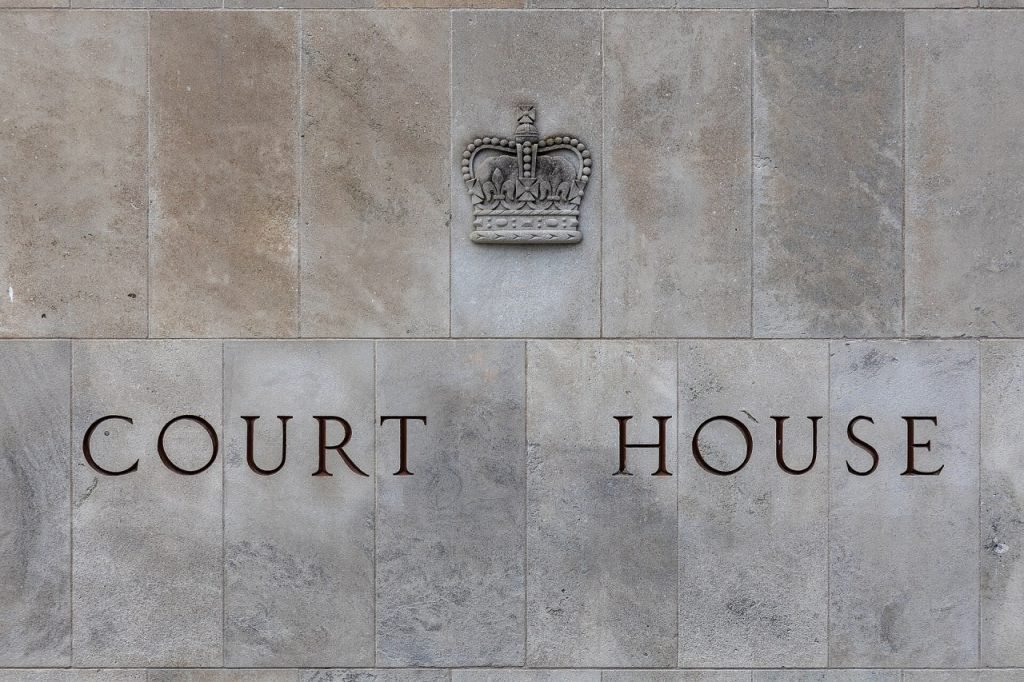
Photo: Chris Woodrich, Wikimedia Commons, CC BY-SA 4.0